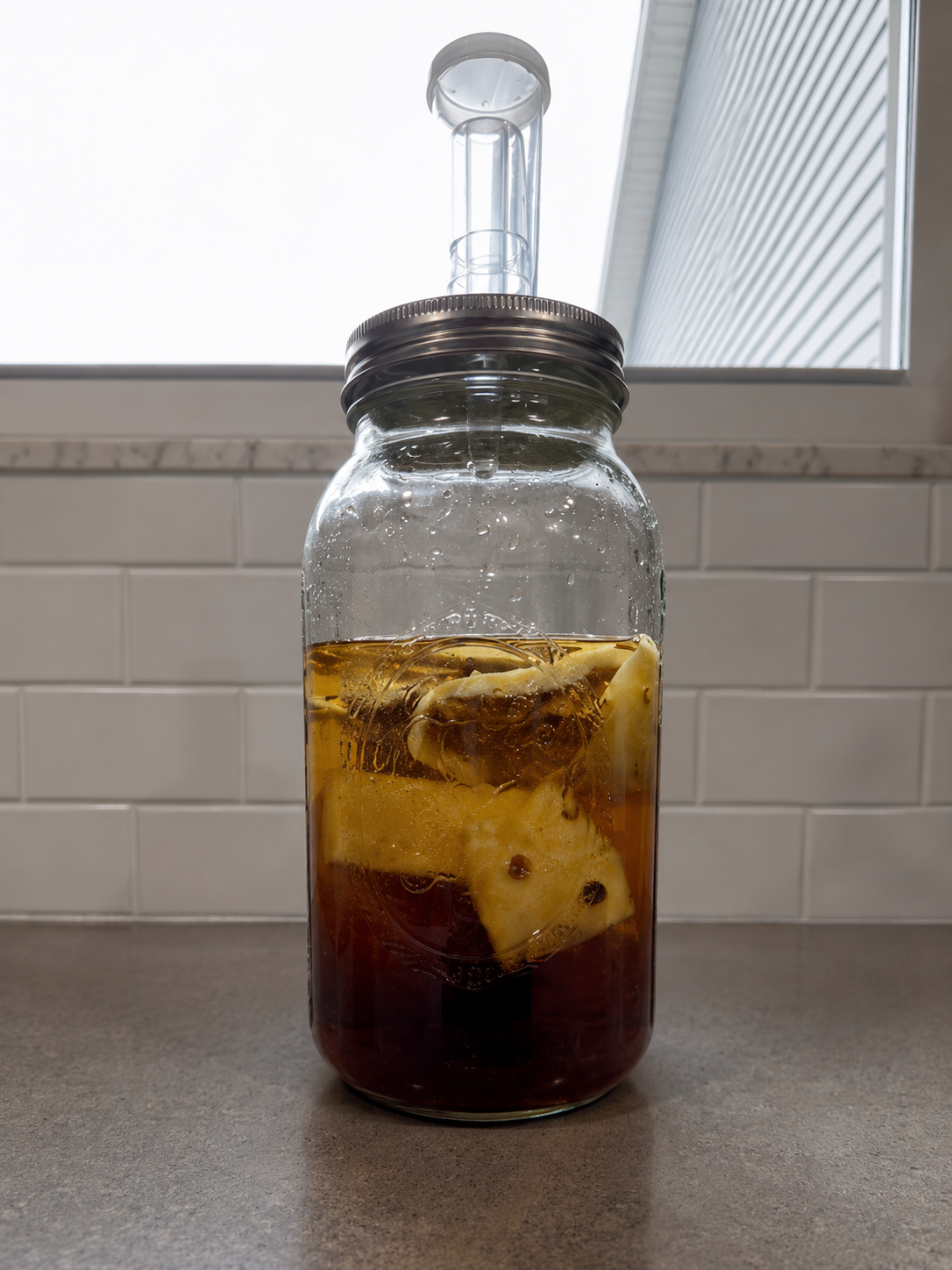
If you’ve ever looked at a pineapple core and peel and wondered if there was a better use for them than the compost pile, let me introduce you to tepache.
Tepache is a traditional Mexican fermented drink made from pineapple peels, sugar, and water. It’s lightly fizzy, slightly sweet, and incredibly refreshing when served cold. The best part? It transforms something most of us throw away into a delicious homemade beverage.
Why We Decided to Try Tepache
We’re always looking for ways to reduce food waste and get the most from the ingredients we bring into our home. After cutting up a pineapple, we saved the peels and core and decided to put them to work.
For our batch, we used:
- Scraps from 1 pineapple (peels and core)
- Cane sugar
- A small amount of molasses
- Water
We placed everything into a fermentation vessel fitted with a fermentation lid and then let nature do the rest.
The Fermentation Process
One of the most common questions people have is, “Where does the fermentation come from?”
Unlike sourdough, where we add an established starter, tepache relies on the naturally occurring wild yeasts and beneficial microorganisms already living on the pineapple’s skin. These microorganisms begin feeding on the sugars in the mixture and create carbon dioxide as they ferment.
That’s where the bubbles come from.
Every batch is a little different depending on temperature, the pineapple itself, and the microorganisms present. In our case, it took about 8 days before we started seeing noticeable bubbling activity.
Once the bubbles appeared, we let it ferment for one additional day. We wanted a little more of the sugar to be consumed so the finished drink wouldn’t be quite as sweet.
After that, we strained it and moved it to the refrigerator.
Served ice cold, it was lightly fizzy, fruity, and incredibly refreshing.
Why Add Sugar?
At first glance, adding sugar to a fermented drink might seem strange, especially if you’re trying to make something healthier.
The sugar isn’t just there for sweetness—it’s food for the microorganisms doing the fermenting.
As the wild yeasts and bacteria consume the sugar, they produce carbon dioxide, organic acids, and other compounds that give tepache its flavor and fizz.
While not all of the sugar disappears, a portion is converted during fermentation, which is why a longer fermentation typically results in a less sweet drink.
The small amount of molasses we added also contributes minerals and a deeper flavor profile.
Is Tepache Good for Gut Health?
Like many traditionally fermented foods and beverages, tepache contains beneficial microorganisms that develop during fermentation.
While homemade tepache isn’t standardized or tested the way commercial probiotic products are, fermentation can introduce a variety of naturally occurring microbes that may support a healthy gut microbiome.
Tepache also contains organic acids created during fermentation, which contribute to its tangy flavor and may support digestion.
As with any fermented food, the exact microbial content varies from batch to batch.
Did We Need Apple Cider Vinegar?
For this batch, we did not add apple cider vinegar.
Some recipes include a splash of raw apple cider vinegar as an extra source of beneficial microbes or as a way to help lower the pH quickly, but it’s not required.
The microorganisms naturally present on the pineapple skin were enough to get our fermentation going.
That’s one reason it’s important to use a pineapple that hasn’t been aggressively scrubbed or sanitized before fermenting.
Tips for Making Your Own Tepache
- Use fresh pineapple peels and core.
- Wash off dirt, but don’t scrub the fruit excessively.
- Use filtered water if possible.
- Keep the jar at room temperature.
- Be patient—some batches ferment quickly while others take longer.
- Taste daily once bubbling begins.
- Refrigerate when the flavor reaches a balance you enjoy.
A Delicious Way to Reduce Food Waste
One of our favorite things about making tepache is that it gives a second life to something that would normally be discarded.
With just pineapple scraps, sugar, water, and a little patience, you can create a naturally fermented drink that tastes like a tropical soda straight from your refrigerator.
It’s a simple reminder that sometimes the most interesting foods come from ingredients we almost threw away.

Pineapple Pop (aka Tepache)
Ingredients
Equipment
Method
- Wash the pineapple well before peeling.
- Add the pineapple peels and core to a clean half-gallon or gallon fermentation jar.
- Add the cane sugar and molasses.
- Pour in the water and stir until the sugar dissolves.
- Cover with a fermentation lid or airlock.
- Allow to ferment at room temperature for about 8 days, or until bubbles begin to form.
- Once fermentation is active, allow it to continue for 1 additional day to reduce the sweetness.
- Strain out the pineapple scraps.
- Transfer the tepache to jars or bottles and refrigerate.
- Serve cold.
Notes
- The natural yeast and beneficial bacteria responsible for fermentation come from the pineapple skin and the surrounding environment.
- Fermentation time will vary depending on room temperature.
- If using an airtight bottle for a second fermentation, monitor pressure carefully.
- Tepache will continue to slowly ferment in the refrigerator, becoming less sweet over time.
- For the best flavor, enjoy within 1–2 weeks.
Leave a Reply