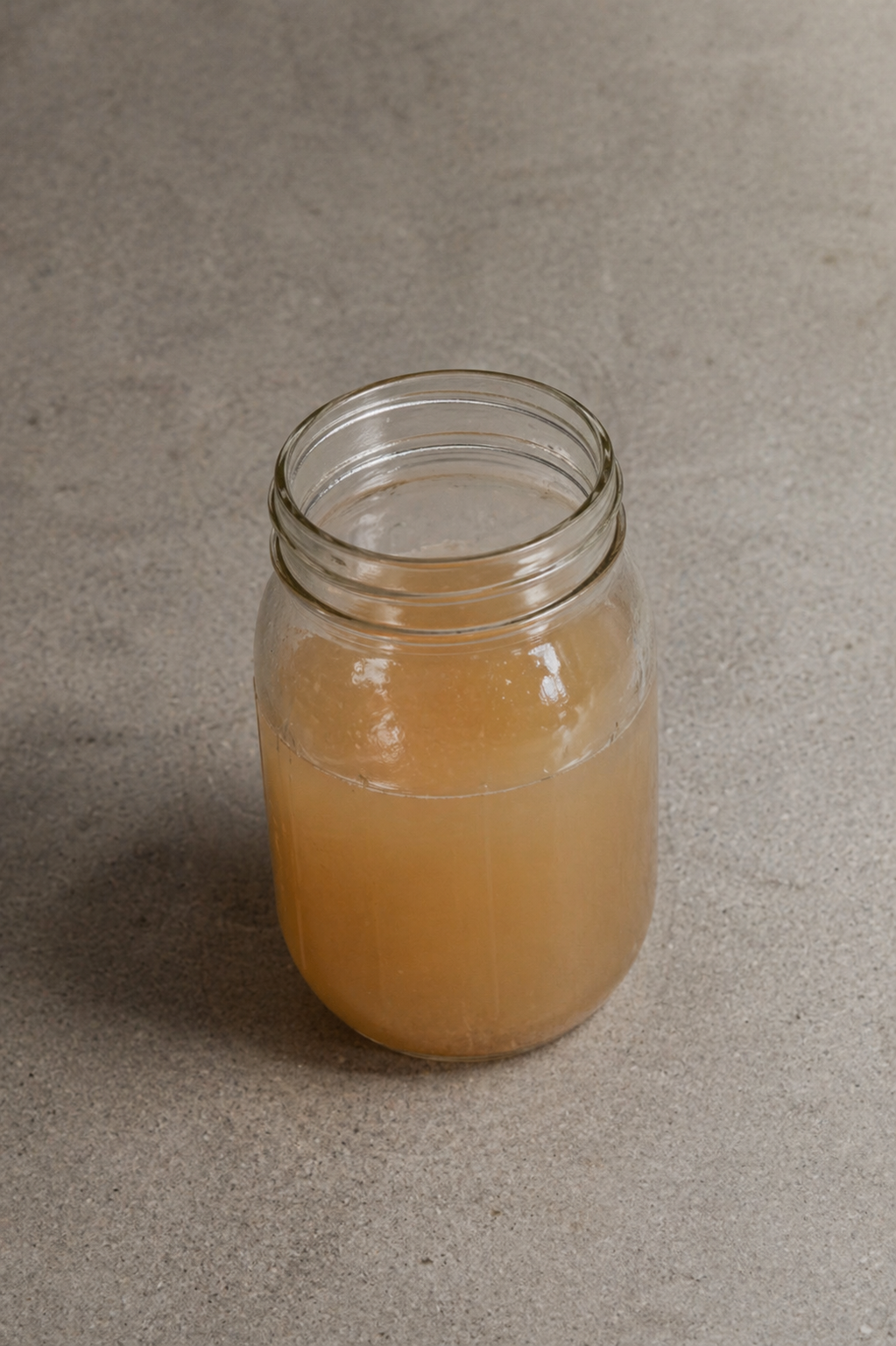
A simple, from-scratch way to make natural fruit pectin using underripe apples—perfect for jams, jellies, and reducing waste in your kitchen.
Jump to RecipeQuick Summary
If you’ve ever gone to make a batch of jam and realized you’re completely out of pectin—or worse, it’s out of stock when you try to order it (been there)—this is one of those simple, from-scratch recipes worth knowing. With just a few green apples and some time, you can make your own natural fruit pectin right at home.
This is one of those quietly powerful kitchen skills that turns scraps into something incredibly useful.
Ingredients
- 2–3 lbs green apples (about 900–1,350 grams)
(crab apples or underripe apples work best) - 8 cups water (1900 grams)
Equipment
- Large stock pot
- Knife & cutting board
- Fine mesh strainer or cheesecloth
- Bowl
- Jar(s) for storage
Instructions
1. Prep the Apples
Wash apples well. Roughly chop them—no need to peel or core (the skins and cores contain the most pectin). We used an apple slicer to speed up the process.
2. Simmer
Add apples and water to a large pot. Bring to a boil, then reduce to a gentle simmer.
Simmer uncovered for 45–60 minutes, stirring occasionally, until apples are soft and breaking down.
3. Strain
Pour mixture through a fine mesh strainer or cheesecloth into a bowl.
Do not press or squeeze if you want a clear pectin (pressing = cloudy result).
Let it drain naturally for at least 1–2 hours.
4. Reduce
Return strained liquid to the pot and simmer again until reduced by about half. You’ll want to have about 2-3 cups of liquid by the time it’s ready to use.
This concentrates the pectin and makes it more effective.
Place a small plate in the freezer while your pectin is reducing. This will be used to test if it’s ready.
5. Cool & Store
Let cool completely, then transfer to jars.
- Fridge: up to 1 week
- Freezer: up to 6 months
How to Test Your Pectin
To test:
- Spoon a small amount of the liquid onto the cold plate from the freezer
- Let it sit for a few seconds
- Run your finger through it
If it’s still thin and runny, keep reducing a bit longer. If it gels and holds its shape, it’s ready.
How to Use Homemade Pectin
Use in place of store-bought pectin when making:
- Jams
- Jellies
- Fruit preserves
General rule:
Use about ¼ to ½ cup (60–120g) per 4 cups of prepared fruit, depending on fruit and desired thickness. Use ¼ cup for fruits that naturally contain more pectin (like apples, berries) Use ½ cup for low-pectin fruits (like strawberries, peaches, elderberries).
Tips for Best Results
- Use underripe apples—they contain the most pectin
- Crab apples are gold if you can find them
- Avoid over-stirring during cooking if you want a clearer result
- Freeze in small portions so you can grab exactly what you need
Common Mistakes
- Using ripe apples → weaker pectin
- Pressing pulp → cloudy liquid
- Not reducing → pectin may be too weak to set
Why This Works
Pectin is a natural fiber found in fruit cell walls. When heated with sugar and acid, it forms a gel—that’s what gives jams and jellies their structure.
Green apples are naturally loaded with it, especially in the skins and cores.
When to Use This vs Store-Bought
Use homemade pectin when you want:
- A more natural, from-scratch approach
- To use up extra apples
- Better control over texture
Use store-bought when you need:
- Consistency every time
- Fast results
Yield
- About 2–3 cups (475–710 grams) of liquid pectin (after reduction)
Nutrition (Approximate per 1 tbsp)
- Calories: 5
- Carbs: 1g
- Fiber: trace
(Will vary based on reduction level)
FAQ
Can I use apple scraps?
Yes! Cores and peels work great.
Does it taste like apples?
Very mild—won’t overpower your jam.
Can I can this for shelf storage?
It’s best frozen unless properly pressure canned.


Ingredients
Equipment
Method
- Wash and roughly chop apples (no peeling or coring).
- Add apples and water to pot; bring to boil.
- Reduce to simmer for 45–60 minutes.
- Strain without pressing.
- Return liquid to pot and reduce to ~3 cups.
- Cool and store in fridge or freezer.
This is one of those recipes that feels almost too simple—but once you know it, you’ll never stress about running out of pectin again.
And now I’m curious…
👉 Would you try making your own pectin, or are you sticking with store-bought?
Watch Trace with a full demonstration here:
Leave a Reply