If you’re getting into sourdough, it’s easy to feel like you need a ton of specialized tools.
You don’t.
These are the exact tools I use every week in my kitchen — nothing fancy, just what actually works. If I were starting over, this is exactly what I’d buy again.
If You’re Just Getting Started, Start Here:
If you only buy a few things, make it these:
- Kitchen scale
- Wide mouth mason jar
- Long spatula
- All-purpose flour
Everything else can come later.
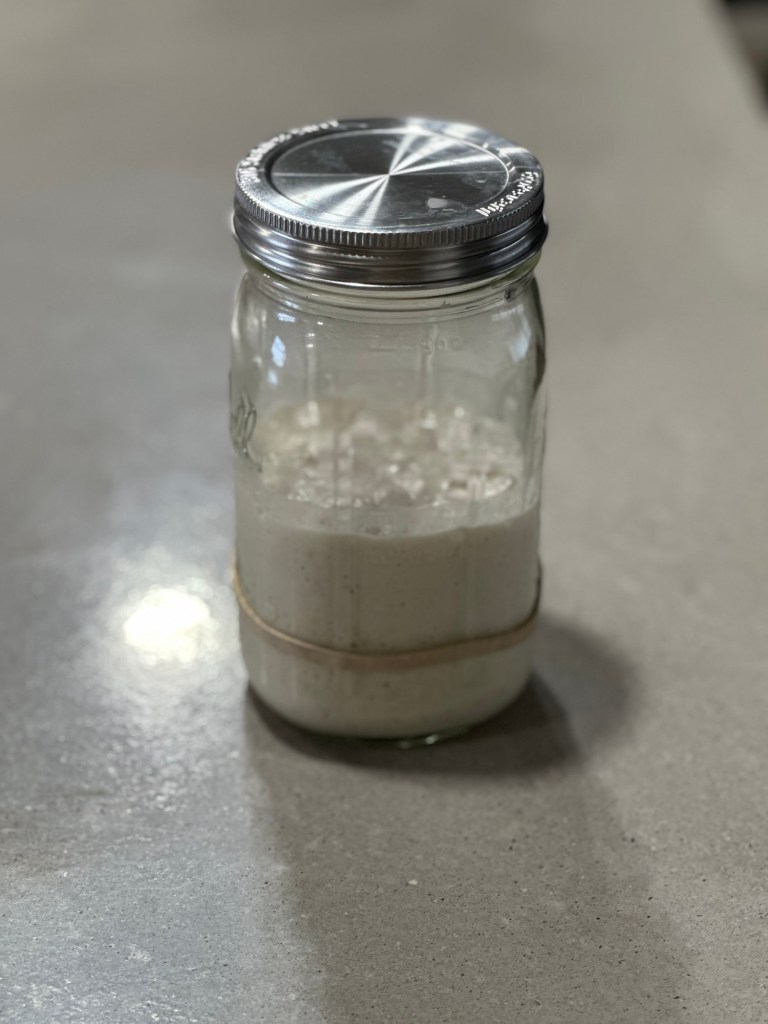
1. Wide Mouth Quart Mason Jar (For Your Starter)
This is where I keep and feed my sourdough starter — nothing fancy, but it makes a difference.
A wide mouth jar:
- Makes it easy to stir without a mess
- Is much easier to clean
- Lets you clearly see bubbles and activity
I also switched to stainless steel lids so I don’t have to deal with the ring + lid every time I feed it. It’s a small upgrade, but it makes the process feel smoother and quicker.
👉 Any wide mouth quart jar will work + lid I use
2. Long Spatula (My Most Underrated Tool)
This is one of those tools I didn’t think I needed… until I used it.
A long spatula:
- Reaches all the way to the bottom of the jar
- Keeps your hands cleaner
- Helps fully mix and scrape without wasting starter
If you’ve ever tried to stir starter with a regular spoon and made a mess of the jar sides — this fixes that instantly.
👉 Shop the long silicone spatula I use
3. Kitchen Scale (Non-Negotiable)
If you’re going to invest in one thing — make it this. A kitchen scale is completely non-negotiable for sourdough.
Measuring by cups might work sometimes, but sourdough is all about consistency. Using grams:
- Gives you repeatable results
- Eliminates guesswork
- Helps you actually understand your dough
This is what takes you from “why didn’t that work?” to “I know exactly what happened.” This is easily the most-used tool in my kitchen — and one I wouldn’t want to bake without. So many dirty measuring cups and spoons have been spared by this one tool.
👉 Shop the digital kitchen scale I use
A Quick Note on Water (This Matters More Than You Think)
This isn’t a “tool,” but it made a noticeable difference for me.
I switched to using spring water because I found that even filtered tap water still had enough chlorine in it to slow things down.
Once I switched:
- My starter became more active
- Feedings were more predictable
- Overall results improved
If your starter ever feels sluggish and you’re doing everything “right,” this is something worth looking at.
No need to overthink it — just something to be aware of.
4. Simple Flour for Feeding Your Starter
Even though I mill my own flour for baking, I keep feeding my starter simple.
I use King Arthur all-purpose flour because:
- It’s consistent
- Easy to grab
- One less variable to think about
When you’re learning sourdough, simplifying variables is one of the best things you can do.
👉 See the flour I keep stocked
5. Pullman Loaf Pan (Perfect Sandwich Bread)
This is one of my favorite tools — especially for feeding a family.
The large Pullman pan gives you:
- Perfect square slices
- Soft, even texture
- Bread that actually works for sandwiches
And if you have kids, you already know… shape matters 😅
This has been the easiest way for me to make homemade bread that everyone will consistently eat.
👉 Shop the Pullman loaf pan I use
6. Vital Wheat Gluten (Especially for Fresh Milled Flour)
If you’re baking with whole wheat or fresh milled flour, this helps a lot.
Fresh milled flour can naturally be a bit denser, so adding vital wheat gluten:
- Improves structure
- Helps the dough rise better
- Creates a softer, fluffier texture
It’s one of the simplest ways to bridge the gap between homemade and that soft, sandwich-style texture.
👉 See the vital wheat gluten I use
7. Stand Mixer with Dough Hook
I use my KitchenAid Professional 7 Quart Bowl-Lift Stand Mixer with the dough hook.
Can you do everything by hand? Absolutely.
But for me, this:
- Saves a lot of time
- Makes bigger batches manageable
- Keeps sourdough realistic during a busy week
If you’re baking regularly for your family, this is one of the biggest time-savers I own.
8. Salt (Simple but Important)
Salt plays a bigger role than people think — both for flavor and dough structure.
I usually use Morton kosher salt or Celtic salt.
The biggest thing is consistency — once you find what you like, stick with it so your results stay predictable.
👉 See the salt I use (kosher / Celtic)
Final Thoughts: Keep It Simple
Sourdough can be as complicated as you make it — but it doesn’t have to be.
If you’re just getting started, focus on:
- A jar
- Flour
- Water
- A scale
Everything else can come later.
The goal isn’t perfection — it’s building a rhythm that works for your life and creating food your family actually enjoys.
If you’re just getting started, these are the exact tools I’d buy again without overthinking it.
Want More?
If you’re getting started with sourdough, I’d be happy to share:
- Here is my go-to sandwich bread recipe
- A simple starter guide
- Or exactly how I use these tools week-to-week
Just leave a comment — I love helping people get started.
This post may contain affiliate links. If you purchase through these links, I may earn a small commission at no additional cost to you.
 At the Ritter Table
Leave a comment