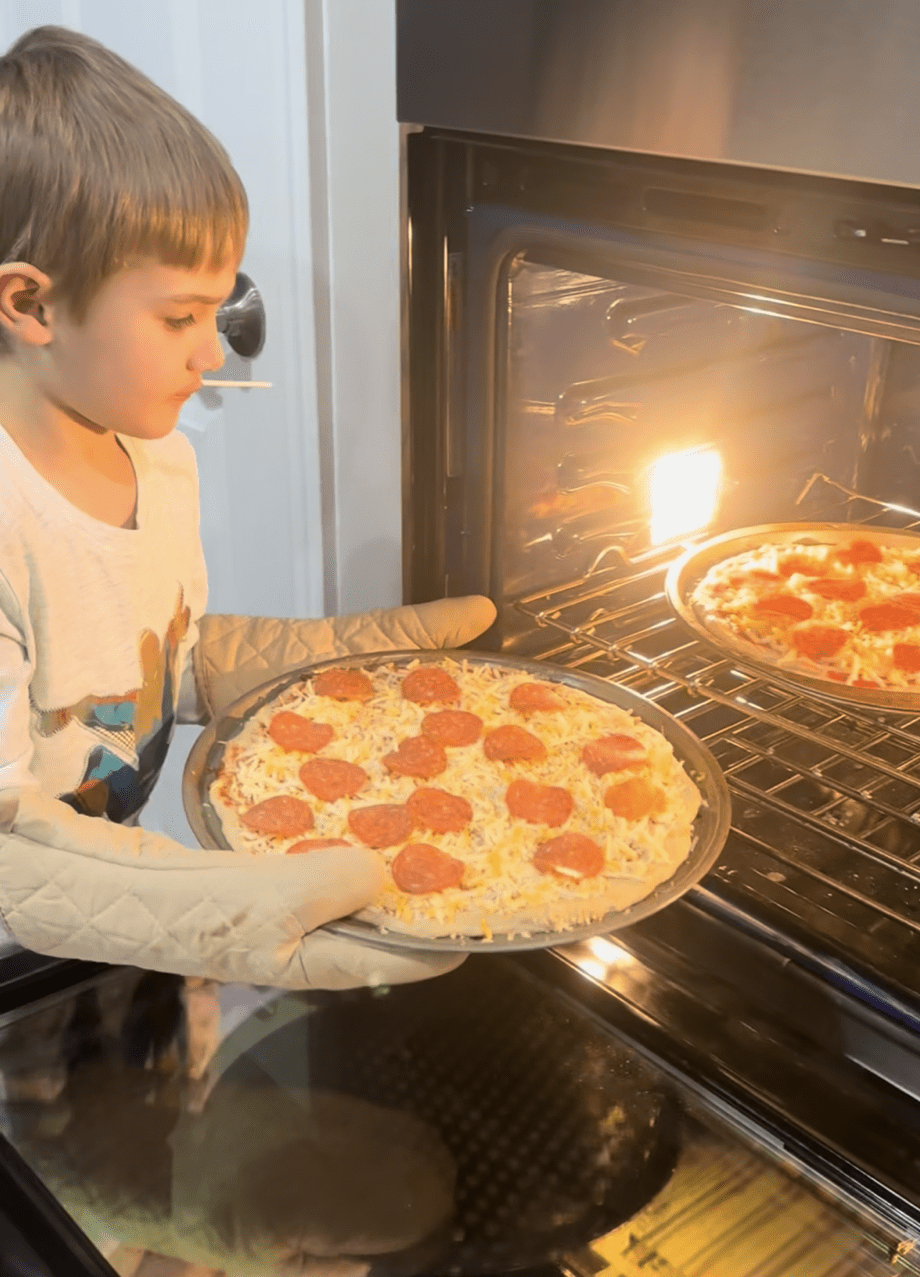
Pizza night doesn’t have to be all-or-nothing. While we love making fresh-milled sourdough pizza at home, this recipe is intentionally adaptable — so it works whether you mill your own flour, buy flour at the store, use sourdough starter, or need a yeast-based option.
The goal isn’t perfection. It’s a reliable, nourishing, family-friendly pizza that fits real life. Bonus that it can be made as a healthier pizza option for the upcoming Super Bowl.
Why We Love Hard White + Kamut for Pizza
When we do mill our own flour, this is our favorite blend for pizza crust:
- Hard white wheat gives pizza dough the strength it needs to stretch, hold toppings, and bake up chewy.
- Kamut (Khorasan) adds tenderness, extensibility, and a subtle buttery flavor that softens the whole-grain profile.
Together, they create a crust that:
- Stretches easily to 12–14″
- Has crisp edges and a tender interior
- Tastes hearty but not heavy
Pizza Dough Recipe (Makes 2 Crusts, 12–14″ Each)
Flour Options (Choose One)
Fresh-milled (our favorite):
- 315 g hard white wheat berries, milled fresh (70%)
- 135 g Kamut wheat berries, milled fresh (30%)
OR Store-bought flour:
- 315 g bread flour
- 150 g whole wheat flour
- White whole wheat works especially well here.
- You may need to add a little extra flour if your dough feels sticky at the end. Sometimes store bought flour doesn’t absorb as much liquid as fresh milled flour.
Total flour: 450 g (≈ 3¾ cups)
Dough Ingredients
- Flour: 450 g
- Water: 315 g (≈ 1⅓ cups)
- Active sourdough starter (100% hydration): 90 g (≈ ⅓ cup)
- Fine sea salt: 9 g (≈ 1½ tsp)
- Olive oil: 15 g (≈ 1 Tbsp)
Mixing & Fermentation (Sourdough Version)
Autolyse: Mix flour and water until no dry spots remain. Cover and rest 30–40 minutes. This step is especially helpful for fresh-milled flour, but still beneficial with store-bought flour.
Add Starter, Salt & Oil: Mix until fully incorporated. Dough should feel soft and slightly tacky.
Strength Building: Perform 2 gentle stretch-and-folds, spaced 20–25 minutes apart.
Short Room-Temp Rest: Let dough rest covered until just slightly puffy (about 10% rise).
Cold Ferment: Transfer to a lightly oiled container and refrigerate 8–24 hours.
No Sourdough Starter? Use This Yeast Option
If you don’t have a starter, this dough still works beautifully.
Yeast Substitute
- Omit sourdough starter
- Reduce water to 285 g (≈ 1¼ cups)
- Add 2¼ tsp (7 g) active dry yeast
Mix yeast into the water, then proceed with the recipe as written.
Fermentation options:
- Same-day: 2–3 hour room-temp rise (depending on the temperature of your kitchen)
- Overnight: Refrigerate after a short rise for better flavor
Bake Day Timeline (5:00 pm Dinner)
- 12:00 pm – Remove dough from fridge
- 2:30 pm – Divide into 2 × ~375 g dough balls
- 3:30 pm – Preheat oven to 500–550°F with stone or steel
- 4:45 pm – Shape pizzas
- 5:00 pm – Bake
It’s important to remember this is a rough guide – do not stress if your timeline doesn’t match exactly.
Shaping the Crust
Lightly flour your surface and gently press from the center outward, leaving the edge thicker. Stretch slowly. If the dough resists, let it rest 5 minutes and continue.
Sauce: Homemade or Store-Bought
We like to make our own pizza sauce, but use whatever works for you.
If you’re buying sauce, look for:
- No added sugar
- Simple ingredient list
- No unnecessary preservatives
A solid widely available option is Rao’s Marinara, which has:
- No added sugar
- Clean, recognizable ingredients
- A flavor that doesn’t overpower the crust
Use sauce lightly — fresh dough shines when it isn’t weighed down.
The Cheese Blend (Why We Shred Ourselves)
Our Go-To Cheese Blend (for 2 pizzas)
- 8 oz low-moisture whole milk mozzarella
- 4 oz colby jack
- 2 oz parmesan
- 2 oz asiago (optional but recommended)
Why shred your own cheese?
Pre-shredded cheese is often coated with anti-caking agents, added starches and preservatives. These can prevent proper melting, create a chalky texture, release excess moisture. Block cheese melts smoother, tastes better, and browns more evenly — especially on high-heat pizza.
Watch Nash demonstrate how easy it can be with the right tools.
Pepperoni Choice
One of the simplest ways to elevate your homemade pizza is with a good pepperoni — not just any pepperoni, but one with a clean ingredient list and thoughtful flavor. Here’s how we think about pepperoni as part of a great pizza experience.
Why Nitrates/Nitrites Matter
Many conventional cured meats use synthetic nitrates and nitrites (like sodium nitrite) to preserve color and extend shelf life. While these are approved for food use, cleaner-ingredient pepperoni often uses natural alternatives (like celery juice powder or sea salt) and shorter ingredient lists. Choosing pepperoni without added artificial preservatives means:
- Fewer synthetic additives
- Simpler, more recognizable ingredients
- A product that aligns better with a whole-foods approach
For families eating pizza regularly, especially when kids are involved, this is a choice we feel good about.
Kid-Friendly Favorite: Applegate Uncured Pepperoni
We use Applegate pepperoni because:
- No artificial nitrates/nitrites added
- Simple, recognizable ingredients
- Mild spice profile — perfect for kids who don’t like heat
- Crisps beautifully in a hot oven
- Pairs nicely with a whole-grain crust without overpowering it
It’s a great all-around option when family dinner is the priority and you want a clean, familiar flavor.
Adult Choice (Bolder Flavor)
If you’re making pizza for a group of adults and you want a bit more spice and depth of flavor, consider a pepperoni with a slightly bolder profile. A widely available choice that still keeps ingredients relatively clean is:
Wellshire Uncured Pepperoni
- Uses natural curing agents like celery juice powder
- No artificial preservatives
- Slightly more peppery/spiced flavor compared to mild varieties
- Crisps up nicely without becoming overly greasy
This strikes a great balance: more flavor than standard mild pepperoni, but still clean and approachable.
Most Widely Available Options
Here are a few pepperonis that you can usually source at grocery stores or local markets — without sacrificing ingredient quality:
- Applegate Uncured Pepperoni → Mild, clean, kid-friendly
- Wellshire Uncured Pepperoni → Bolder flavor, adult-friendly
- Columbus Craft Meats Uncured Pepperoni → Widely available, recognizable flavor
- Citterio All-Natural Pepperoni → Traditional Italian taste (check that it uses natural cures)
When you’re grocery shopping or using delivery services like Instacart or Whole Foods Online, searching for “uncured pepperoni” will usually bring up these cleaner options.
Baking Tips
- Bake directly on a fully preheated stone or steel
- Rotate once if needed
- Typical bake time: 6–9 minutes
Finish with olive oil or fresh basil if you like.
Why This Recipe Works for So Many Kitchens
This pizza isn’t about doing everything from scratch — it’s about making thoughtful choices where you can.
Whether you:
- Mill your own flour or buy it
- Use sourdough or yeast
- Make sauce or open a jar
This recipe meets you where you are and still delivers a pizza night that feels intentional, nourishing, and genuinely enjoyable.
 Rustic Roots & Modern Finds
Leave a comment