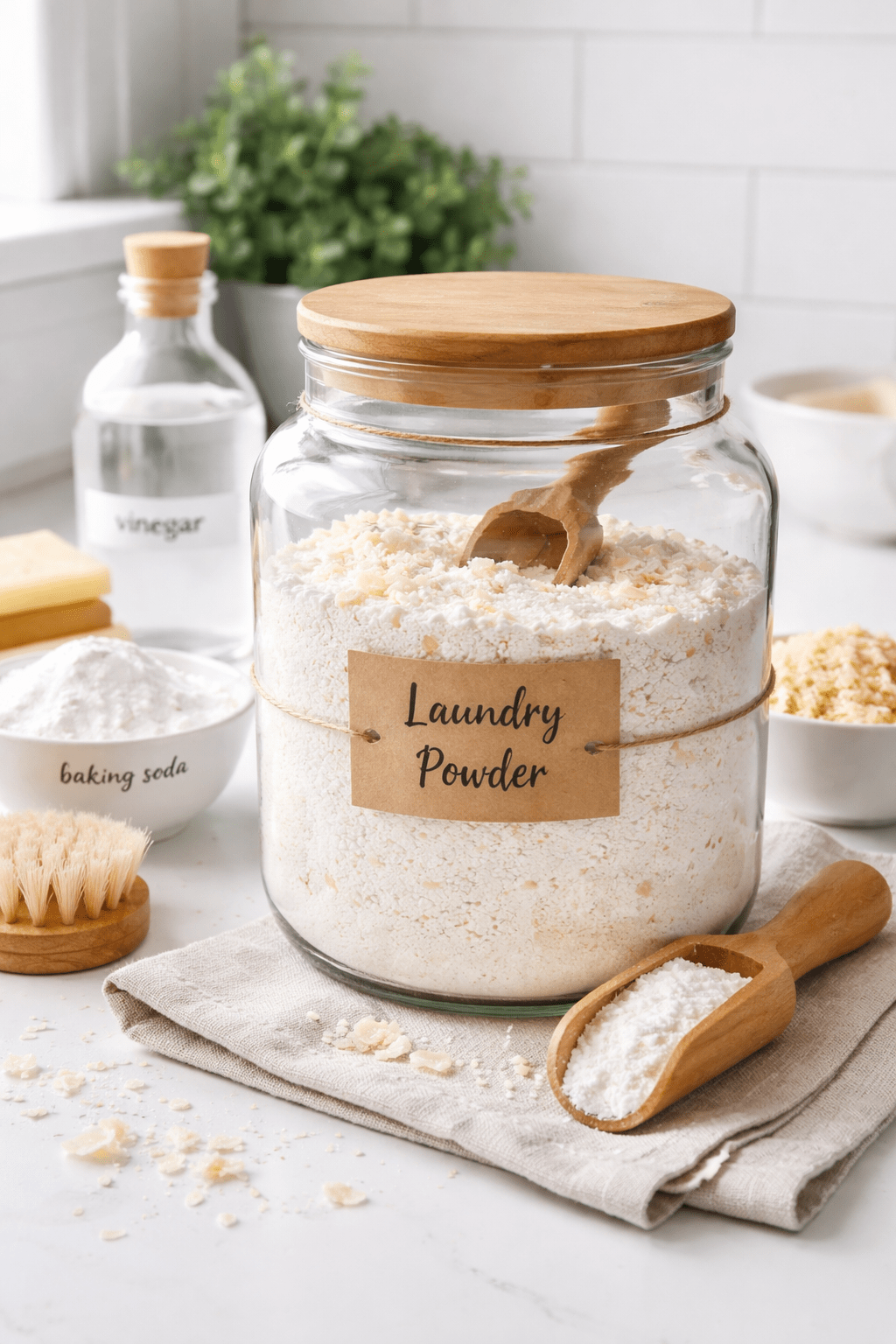
Laundry detergent is one of those everyday products most of us don’t think twice about. We pour it in, press start, and trust that it’s doing its job. But detergent is also something that coats the clothes, towels, and bedding that sit against our skin all day and night — including our kids’ skin.
This isn’t about fear or perfection. It’s about understanding what’s commonly found in mainstream detergents, why certain ingredients raise concern (especially for children), and what cleaner alternatives actually work.
Ingredients in Mainstream Detergents That Raise Red Flags
Many conventional detergents are effective cleaners, but they often rely on ingredients that can be irritating to the skin or are frequently discussed in hormone‑disruption research. The biggest concern isn’t a single exposure — it’s repeated, long‑term contact through fabrics we use daily.
1. Fragrance / Parfum
When a label lists “fragrance” or “parfum,” it can legally represent a blend of dozens of undisclosed chemicals. These blends often include phthalates, which are commonly studied for their potential to interfere with hormone signaling.
What this can do to the body:
- Potential endocrine (hormone) disruption over time
- Skin irritation, rashes, or eczema flare‑ups
- Headaches or respiratory irritation in sensitive individuals
Because fragrance is designed to linger, it can remain in fabric long after washing.
2. Preservatives (such as Methylisothiazolinone / MI)
Methylisothiazolinone is a preservative widely recognized as a cause of allergic contact dermatitis. Laundry detergent is a documented source of exposure for people who develop unexplained rashes or chronic skin irritation. What this can do to the body:
- Itching, redness, or rash
- Worsening eczema or skin sensitivity
- Sensitization over time (reactions can appear after repeated exposure)
3. Ethoxylated Surfactants (and 1,4‑Dioxane Contamination)
Some detergents use ethoxylated ingredients that can be contaminated during manufacturing with 1,4‑dioxane — a compound that is not required to be listed on ingredient labels because it’s a byproduct, not an added ingredient. What this can do to the body:
- Skin and eye irritation
- Increased concern with repeated, long‑term exposure
- Greater relevance for products used daily on clothing and linens
Why Towels and Other Wet Fabrics Deserve Extra Attention
Items that are repeatedly wetted and pressed directly against the skin deserve special consideration, especially in households with children. This includes:
- Face towels and washcloths
- Bath towels
- Pillowcases
- Baby and kids’ pajamas
- Underwear and socks
Why this matters:
- Wet skin is more vulnerable. Water softens the outer skin barrier, making it more prone to irritation.
- Sensitive areas are involved. Towels touch the face, eyes, neck, and hands — areas with thinner skin.
- Residue transfer is real. Detergent residue left in fabric can transfer to skin with repeated use.
For many families, switching to a cleaner detergent for towels, bedding, and close‑contact clothing can noticeably reduce irritation and sensitivity.
Cleaner Laundry Detergent Alternatives
1. Molly’s Suds (Top Choice)
Molly’s Suds is my number one recommendation, and I’ve personally been using it for years.
Why I love it:
- Simple, transparent ingredient list
- No synthetic fragrance or dyes
- Gentle enough for sensitive skin and kids
- Powder format with less plastic waste
If you’re thinking, “But I like my laundry to smell good,” you’re not alone. Molly’s Suds offers essential‑oil‑infused options, including Eucalyptus, which is my personal favorite. You still get a light, clean scent — without synthetic fragrance.
2. Nellie’s Laundry Soda (Great Alternative)
Nellie’s Laundry Soda is a strong second choice and very comparable to Molly’s Suds in performance.
Why it works well:
- Extremely minimal ingredient list
- Unscented (ideal for very sensitive skin)
- Effective in both HE and standard machines
If you’re choosing between the two:
- Molly’s Suds is great if you want essential‑oil scent options
- Nellie’s is great if you only want completely fragrance‑free
Both are far cleaner options than most conventional detergents.
DIY Powder Laundry Detergent Recipe
If you enjoy making household staples yourself, this simple powder detergent is effective, affordable, and customizable.
Ingredients
- 2 cups washing soda (sodium carbonate)
- 2 cups baking soda (sodium bicarbonate)
- 1 cup finely grated unscented castile soap or soap flakes
- 1 cup oxygen booster (sodium percarbonate – optional but recommended)
Optional for hard water:
- ½ cup citric acid
Directions
- Mix all ingredients thoroughly in a large bowl.
- Store in an airtight container and label clearly.
- Keep out of reach of children.
How Much to Use
- HE machines: 1–2 tablespoons per load
- Standard machines: 2–3 tablespoons per load
If you prefer scented laundry, add a few drops of essential oil per load rather than scenting the entire batch.
Extra Clean‑Laundry Tips
- Choose fragrance‑free or essential‑oil‑scented products when possible
- Add an extra rinse for towels and bedding
- Skip fabric softener; use white vinegar in the rinse cycle instead
- Clean your washing machine monthly to reduce residue buildup
 Rustic Roots & Modern Finds
Leave a comment