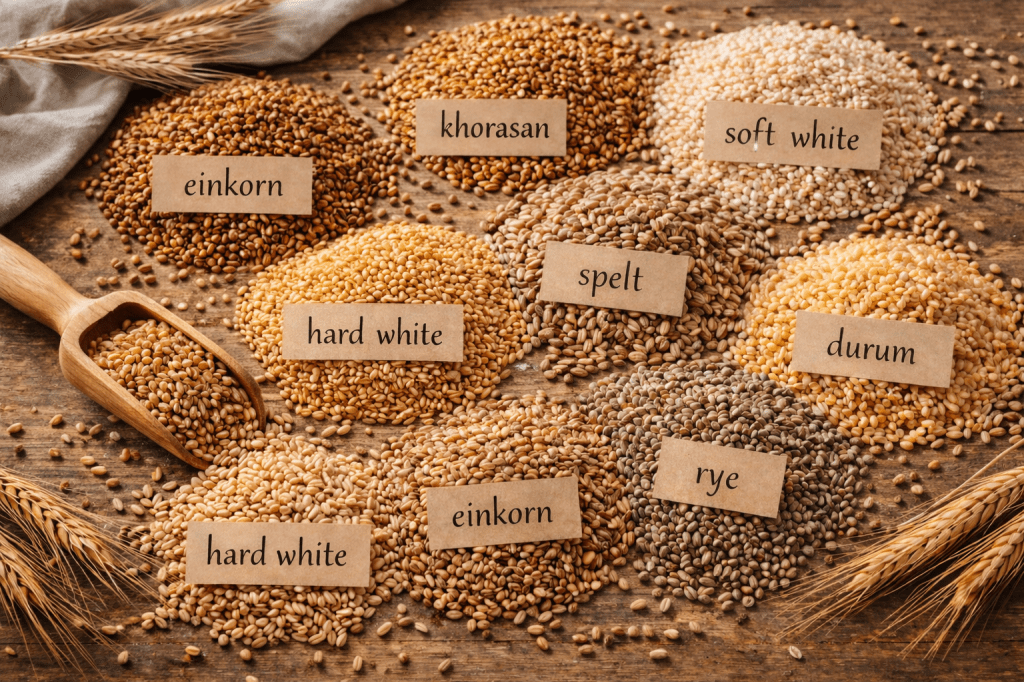
If you’re new to milling your own flour, choosing wheat berries can feel surprisingly overwhelming. Hard? Soft? Red? White? Ancient grains?! The good news is: you don’t need to know everything to get started. A little context goes a long way.
I’m very much a jump in with both feet kind of person (my first-ever wheat berry purchase was 50 pounds of hard white and 50 pounds of hard red 🙃), but I know that’s not everyone’s style. This guide is meant to give you just enough information to confidently choose what works for your kitchen—whether you’re buying a small bag to test things out or slowly building a pantry.
The Main Types of Wheat Berries (What to Know & What to Use Them For)
Hard White Wheat Berries
Hard white wheat is usually the easiest place to start. It has a mild, slightly sweet flavor and a lighter color once milled.
Nutrition: High in protein and fiber, similar to hard red wheat, but with a softer flavor profile.
Best Uses: Sandwich bread, dinner rolls, pizza dough, tortillas, muffins, and all-purpose-style baking. This is my most-used grain and the one I recommend first for most families.
Hard Red Wheat Berries
Hard red wheat has a deeper, more robust “whole wheat” flavor. It’s heartier and more assertive than hard white.
Nutrition: High protein, high fiber, rich in minerals like iron and magnesium.
Best Uses: Artisan loaves, hearty sandwich bread, sourdough, and recipes where you want that classic whole wheat taste.
Soft White Wheat Berries
Soft white wheat is lower in protein and produces a very tender flour.
Nutrition: Slightly lower protein, still rich in fiber and micronutrients.
Best Uses: Pastries, cakes, cookies, biscuits, pancakes, muffins, and quick breads. If you bake a lot of sweets, this one is a game-changer.
Einkorn
Einkorn is an ancient grain with a rich, golden color and slightly nutty flavor. It behaves differently than modern wheat.
Nutrition: Lower gluten strength, higher in certain antioxidants and minerals. Many people find it easier to digest (though it is not gluten-free).
Best Uses: Muffins, pancakes, cookies, quick breads, and simple loaves. It absorbs liquid differently, so recipes often need slight adjustments.
Khorasan (Kamut®)
Khorasan is another ancient grain with large berries and a buttery, nutty flavor.
Nutrition: Higher protein than modern wheat, rich in selenium and zinc.
Best Uses: Flatbreads, pasta, muffins, and blended with other flours for bread. It adds wonderful flavor and softness when mixed with hard wheat.
Rye Berries
Rye has a distinct, earthy flavor and behaves very differently than wheat.
Nutrition: Higher in fiber, especially soluble fiber, and rich in minerals like manganese and magnesium.
Best Uses: Rye bread, sourdough blends, crackers, and rustic loaves. Rye flour works best when blended with wheat rather than used alone.
Durum Wheat / Semolina
Durum wheat is milled into semolina flour, known for its golden color and firm texture.
Nutrition: High protein and rich in carotenoids, which give it its yellow hue.
Best Uses: Pasta, flatbreads, focaccia-style breads, and some rustic loaves. Semolina is not ideal for soft baked goods like cakes or muffins.
Spelt
Spelt is an ancient grain related to wheat with a slightly sweet, nutty flavor.
Nutrition: Moderate protein, easier gluten structure for some people to digest (not gluten-free).
Best Uses: Sandwich bread, muffins, pancakes, cookies, and quick breads. It absorbs less liquid than modern wheat and benefits from gentle mixing.
Emmer (Farro)
Emmer, often sold as farro, is another ancient grain with a hearty texture.
Nutrition: High in protein and minerals, especially magnesium and iron.
Best Uses: Rustic breads, porridge-style bakes, and blending with modern wheat for added flavor and nutrition.
Where I Buy Wheat Berries
I personally buy our wheat berries from Azure Standard. Buying in bulk works well for our family (we went through over 125 pounds of flour last year 😬) and it is quite a bit cheaper if you have a place to store it. With that said I fully realize that bulk buying isn’t convenient, or appealing, for everyone.
If you’re just getting started or want to test a grain before committing, buying smaller quantities of organic or glyphosate free wheat berries is a great option. The links above are for smaller-size options that can be ordered online so you can experiment without filling your pantry on day one. There’s no right or wrong pace here (at least that is what I tell myself).
Shelf Life & Storage (Why Wheat Berries Are Worth It)
One of the biggest advantages of wheat berries is their long shelf life when stored properly. When kept cool, dry, and protected from oxygen and pests, wheat berries can last 10–30 years.
Storage Options
- Food-grade plastic tubs with tight-fitting lids
- Glass gallon jars (my personal preference)
If you’re anti-plastic like I am, I store wheat berries in one-gallon glass jars with:
- 1 tablespoonfood-grade diatomaceous earth (mixed into the berries)
- An oxygen absorber in each jar
This helps prevent pests and extends shelf life without chemicals. Store jars in a cool, dark place for best results.
A Few Encouraging Notes If You’re New
- You don’t need every grain at once
- Hard white wheat alone can cover most baking needs
- You can blend grains as you gain confidence
- Start small if that feels comfortable
Fresh-milled flour doesn’t have to be complicated—it just takes a little curiosity and a willingness to try.
 Rustic Roots & Modern Finds
Leave a comment