Here’s Your History Lesson for the Day
For most of human history, flour was not a pantry staple meant to last indefinitely. Grain was stored whole because it was stable in that form, and flour was milled only as it was needed. In many towns and villages, the miller played a central role in daily life. Families brought their grain to be ground, often weekly or even daily, and baking followed closely behind. Fresh flour was simply part of the rhythm of eating.
This practice wasn’t based on preference alone — it was practical. Once grain is milled, the natural oils in the germ are exposed to air and begin to break down. Fresh flour was valued because it was at its peak, both in flavor and in nourishment. Bread made from freshly milled grain was hearty, sustaining, and nutritious, not a specialty item or health trend.
The idea of milling flour on the same day it was used wasn’t considered extra work; it was just how food was prepared. There was no expectation that flour would travel long distances, sit in warehouses, or remain unchanged over time. The connection between grain, flour, and bread was immediate and local, and people understood that freshness mattered — even if they didn’t describe it in modern nutritional terms.
How Modern Flour Changed the Way We Eat
Modern flour exists largely to solve a storage and consistency problem. As food systems scaled and industrialized, flour needed to last longer, ship farther, and behave predictably in commercial baking. To achieve this, the grain was refined — the bran and germ removed — leaving primarily the starchy endosperm behind. While this process extended shelf life, it also removed much of what made the grain nourishing in the first place.
To compensate, refined flour is often “enriched,” meaning certain vitamins and minerals are added back after processing. While enrichment addresses some nutrient loss, it doesn’t replace everything that was removed, nor does it restore the natural balance of the whole grain. The result is a product that performs well on shelves and in factories, but behaves very differently in the body than freshly milled flour once did.
Over time, this shift changed how we eat. Bread became lighter, softer, and less filling. Meals that once sustained people for hours required larger portions or additional foods to feel satisfied. Flour became something we consumed often, but with diminishing nutritional return.
Understanding this shift helped me see fresh-milled flour not as a step backward, but as a return to a more balanced approach. Modern flour is convenient and accessible, but it represents a compromise. Fresh-milled flour offers a chance to experience grain closer to its original form — with its structure, flavor, and nourishment still intact.
What Sparked My Interest in Fresh-Milled Flour
My interest in fresh-milled flour actually began with sourdough. As I learned more about fermentation and traditional bread-making, I kept coming across references to freshly milled grain and the benefits that come from milling flour on demand. Again and again, I read about how sourdough and fresh-milled flour were historically used together as practical, everyday practices.
The more I researched, the more it made sense. Sourdough fermentation helps make grains more digestible, and fresh-milled flour retains nutrients that are lost when flour is processed and stored long-term. Milling flour just before using it unlocks the natural oils and vitamins in the grain — elements that begin to degrade almost immediately after milling. It felt like the missing piece in understanding why traditional bread was both nourishing and sustaining.
What started as curiosity alongside my sourdough journey quickly turned into a deeper interest in how grain was meant to be used. Milling fresh flour wasn’t about adding another step for the sake of it. It was about aligning with a process that honored the grain itself and the way it had been used for generations.
What Is Actually Found in Fresh-Milled Flour?
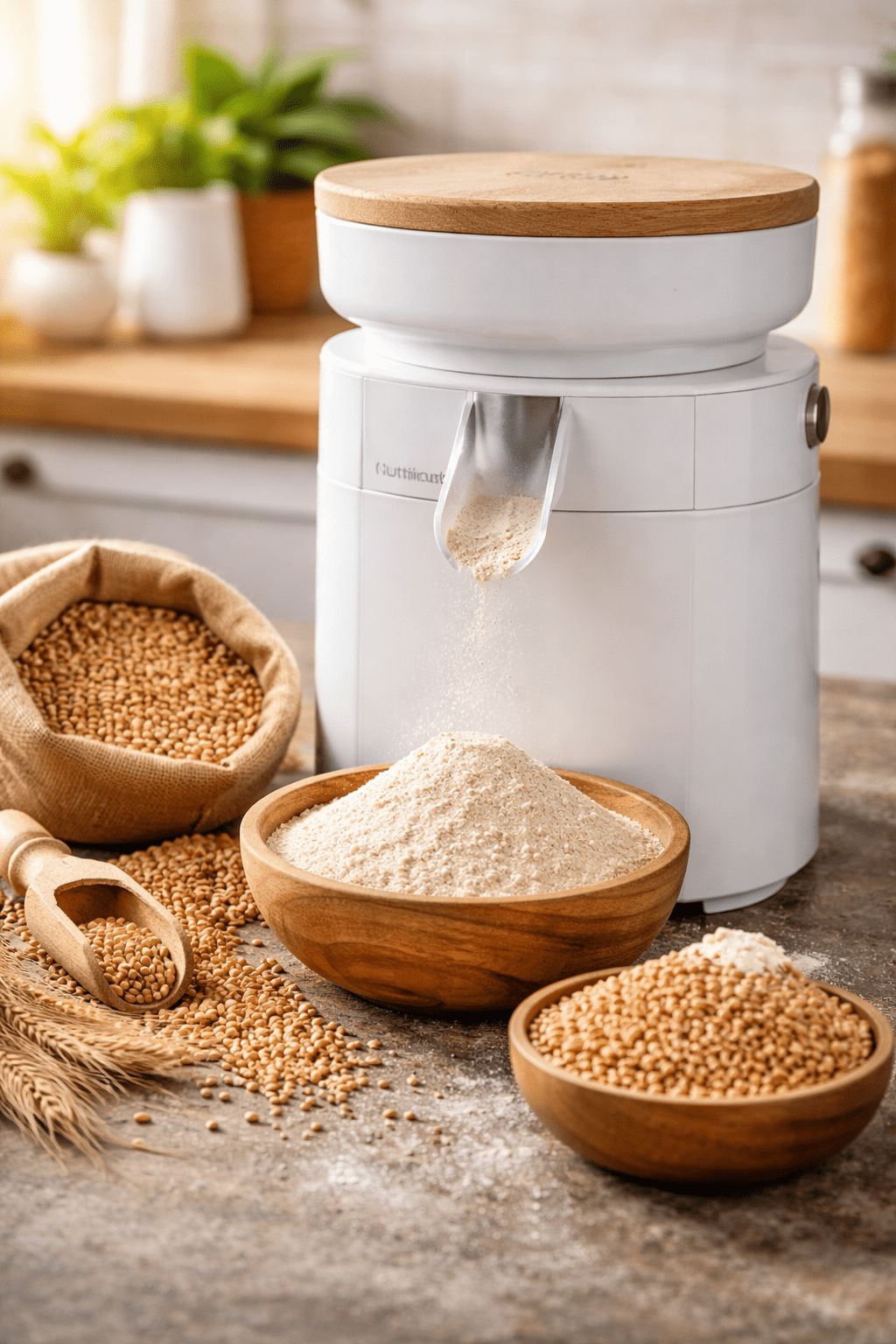
Fresh-milled flour is made by grinding the entire wheat berry (the bran, germ, and endosperm) just before use. Each part contributes something different, and together they create a food that is nutritionally complete in a way refined flour is not.
Here’s what fresh-milled whole wheat flour naturally contains:
Protein: Whole wheat berries contain protein, typically in the range of 12–15%, depending on the wheat variety. This protein contributes to structure in baking and also plays a role in satiety, helping meals feel more sustaining.
Dietary Fiber: Fresh-milled flour retains both insoluble and soluble fiber, which support digestion and help slow the absorption of carbohydrates. Fiber is one of the main components removed during flour refinement.
Healthy Fats (Natural Oils): The wheat germ contains small amounts of natural fats, including essential fatty acids and vitamin E. These fats are highly sensitive to air and light, which is why they are removed in commercial flour — and why fresh milling matters. These oils contribute to nutrient absorption and flavor.
B Vitamins: Fresh-milled flour naturally contains B vitamins such as thiamin (B1), riboflavin (B2), niacin (B3), and folate (B9). These vitamins support energy metabolism and nervous system function. While refined flour is often “enriched” with some B vitamins, the naturally occurring versions exist in balance with the rest of the grain.
Minerals: Whole wheat berries contain trace minerals including magnesium, iron, zinc and phosphorus. These minerals play roles in everything from muscle function to immune health and blood sugar regulation.
Phytonutrients and Antioxidant Compounds: Fresh-milled flour also contains plant compounds that are largely absent in refined flour. These compounds contribute to overall nutritional complexity and may support long-term health when consumed consistently as part of a balanced diet.
If you’re new to fresh milling, whole wheat berries are the starting point. Many people look for organic options that are grown and stored with care, as grain quality directly affects both flavor and performance in baking. Reputable grain suppliers typically offer a variety of wheat types — such as hard red, hard white, and soft white — allowing bakers to choose what best fits their needs.
One source I personally use is Azure Standard, which offers a wide selection of organic wheat berries and other whole foods. I appreciate their commitment to sourcing, transparency, and the consistency of their grain quality.
Why Fresh Milling Changes How Flour Functions in the Body
When flour is milled fresh, these nutrients remain intact and available. Over time, exposure to oxygen, heat, and light degrades many of these components – especially the fats and vitamins in the germ. This is why commercially milled whole wheat flour, even when labeled “whole grain,” does not behave the same way as flour milled and used shortly after grinding. Fresh milling preserves the grain’s structure, nutrient density, and digestive pacing, which helps explain many of the benefits people notice.
Potential Health Benefits of Using Fresh-Milled Flour Regularly
I want to be clear: I’m not a doctor or a certified nutritionist. What I am is someone who cares deeply about the food placed on our family’s dining room table. Milling my own flour opened a door for me to learn, research, and question how our everyday staples are made. What I share comes from that curiosity, from reading, and from observing real changes in our home, not from medical authority. With that said, here are some of the benefits you could see with regular consumption.
Blood Sugar Support: Fresh-milled flour retains the fiber and natural structure of the grain, which slows digestion and carbohydrate absorption. This can help support more stable blood sugar levels compared to refined flour, which digests quickly and can lead to sharper spikes and crashes. For many people, meals made with fresh-milled flour feel more balanced, with fewer energy dips after eating.
Digestive Comfort: Because the grain hasn’t been stripped, bleached, or chemically treated, fresh-milled flour often feels gentler on digestion. When paired with traditional preparation methods like sourdough fermentation, the grain’s components may be more accessible and easier to process. Many people report less bloating or heaviness when switching from refined flour to fresh-milled whole grain flour, especially when changes are made gradually.
Increased Satiety and Fullness: The combination of protein, fiber, and natural fats in fresh-milled flour helps the body register fullness more effectively. Foods made with fresh-milled flour often feel more satisfying, which may naturally reduce the need for frequent snacking. This isn’t about eating less, it’s about feeling nourished.
More Steady Energy: Refined flour products tend to provide quick energy that fades rapidly. Fresh-milled flour supports a slower, more sustained release of energy due to its intact grain structure and nutrient content. For some, this results in fewer mid-day crashes and more consistent focus.
Nutrient Density Without Fortification: Fresh-milled flour provides nutrients in their natural form, rather than relying on enrichment to replace what was removed. While fortified flour addresses certain deficiencies, it cannot fully replicate the complexity of the whole grain. Using fresh-milled flour allows grain to function as a foundational food — contributing meaningfully to daily nutrient intake rather than serving as empty calories.
A Grounded Perspective
Fresh-milled flour isn’t a cure-all, and it doesn’t require perfection. Benefits tend to come from regular use over time, not from replacing every baked good overnight. Like many food choices, its value lies in consistency and context — paired with balanced meals, traditional preparation methods, and realistic expectations.
Understanding what’s in fresh-milled flour helps explain why so many people feel a difference when they begin using it. Not because it’s trendy but because it allows grain to be used closer to how it was designed to nourish.
All of this information ultimately shapes my “why”. And if I’m being honest, a genuine love of good bread played a role too!
What Nash’s flour mill demonstration here! 👇🏼
 Rustic Roots & Modern Finds
Leave a comment